






















Understanding 1965 Quarter Worth Through Market Trends
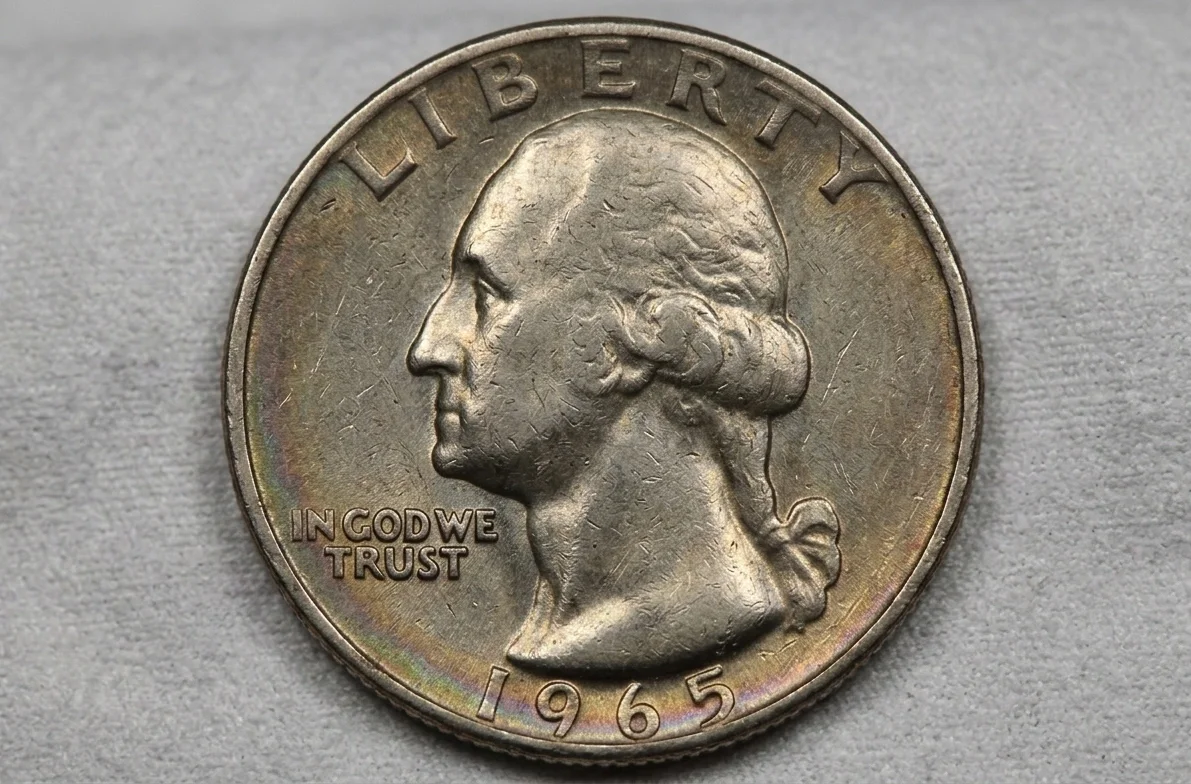
Evaluating the market position of quarters requires a strict focus on minting history and the current auction 1965 quarter worth.

Legislation passed in 1964 forced the United States Mint to alter the composition of coinage starting in 1965.
Removing precious metal from circulation transformed the quarter from a bullion-backed asset into a base-metal token.
Metric | Measurement |
Item Weight | 5.67 grams |
Diameter | 24.26 mm |
Edge Profile | Reeded (119 reeds) |
Core Metal | Copper |
Outer Layer | 75% Copper and 25% Nickel |
Thickness | 1.75 mm |
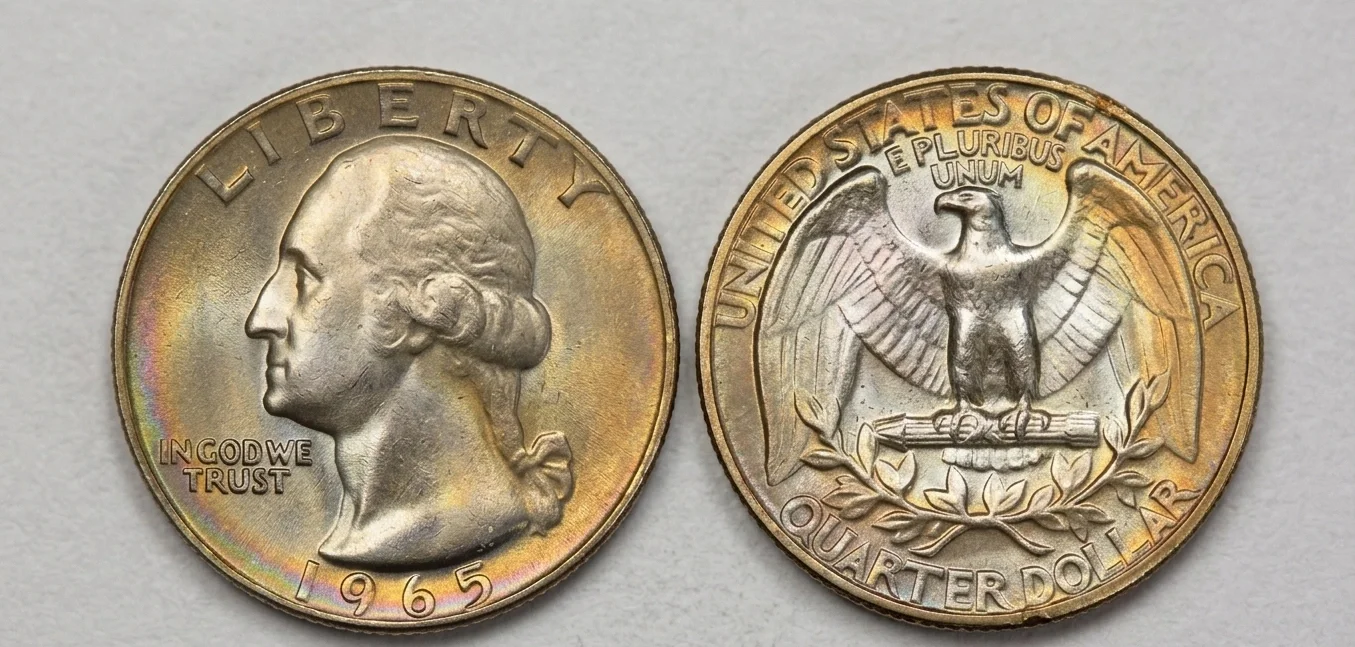
Copper visible on the edge confirms the clad structure of the 1965 issue.
Standard weight variations exceeding 0.2 grams usually indicate environmental damage rather than rarity.
2026 Price Index by Condition
Market liquidity for circulated 1965 quarters remains negligible due to the massive mintage of 1.8 billion units.
Prices fluctuate based on the availability of high-grade examples in professional plastic holders.
Current Price Matrix (April 2026 Data):
Low Grade (G4 — VF20) → $0.25
About Uncirculated (AU50 — AU58) → $0.30 - $0.50
Mint State (MS63) → $1.75
Gem Quality (MS65) → $18.00
Superb Gem (MS67) → $390.00
Registry Set Quality (MS68) → $14,000+
Annual growth for MS67 specimens has averaged 4.5% over the last three years.
Low-grade coins lose purchasing power at a rate of 9% every five-year cycle.
Authenticating a coin through top-tier services becomes economically viable only for pieces appearing flawless to the naked eye.
Transitional Errors: The Silver Anomaly
Equipment overlaps during the transition from 90% Silver to Copper-Nickel clad created legendary rarities.
Accidental feeding of 1964-dated planchets into presses fitted with 1965 dies resulted in high-value strikes.
Silver Quarter Logic Loop: Leftover 1964 planchets → Mixed into 1965 production bins → Struck with 1965 date → Creation of a rare transitional error.
Physical Indicators of a Silver Error:
Weight totaling exactly 6.25 grams.
Absence of a brown Copper line on the rim.
Bright white luster consistent across the entire surface.
High-pitched ring produced when tapped on a hard surface.
Auction records for a 1965 Silver Quarter in MS62 condition reached $16,800 in a recent 2025 sale.
Verified silver examples attract immediate attention from institutional investors and high-net-worth collectors.
Production Errors and Premium Multipliers
Mechanical failures during the striking process yield unique visual characteristics.
Determining the value of an error depends on the severity and visibility of the defect.
Error Type → Observed Effect → Estimated Market Price
Off-Center Strike (50%) → Image shifted significantly → $550
Struck on a Dime Planchet → Smaller diameter and weight → $1,350
Double Die Obverse → Doubling visible in the date or lettering → $200 - $800
Broadstruck → Flat, expanded edges without reeding → $110
Capped Die → Ghost-like image caused by a stuck coin → $350
Coins possessing multiple errors simultaneously command exponential price increases.
Damage sustained during circulation, such as parking lot scrapes, provides zero additional value.
1965 Special Mint Sets (SMS)
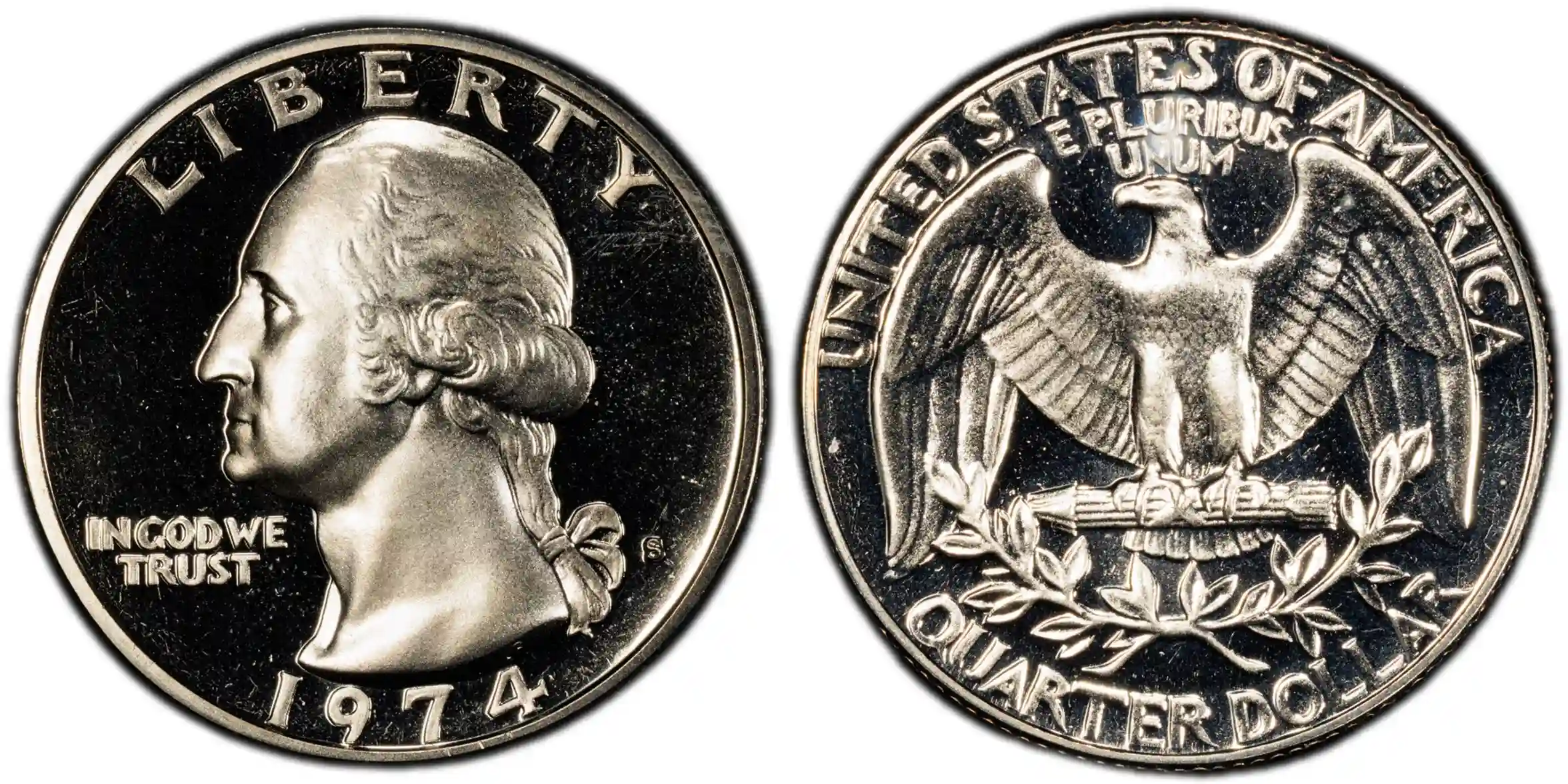
Mint facilities replaced Proof sets with Special Mint Sets between 1965 and 1967.
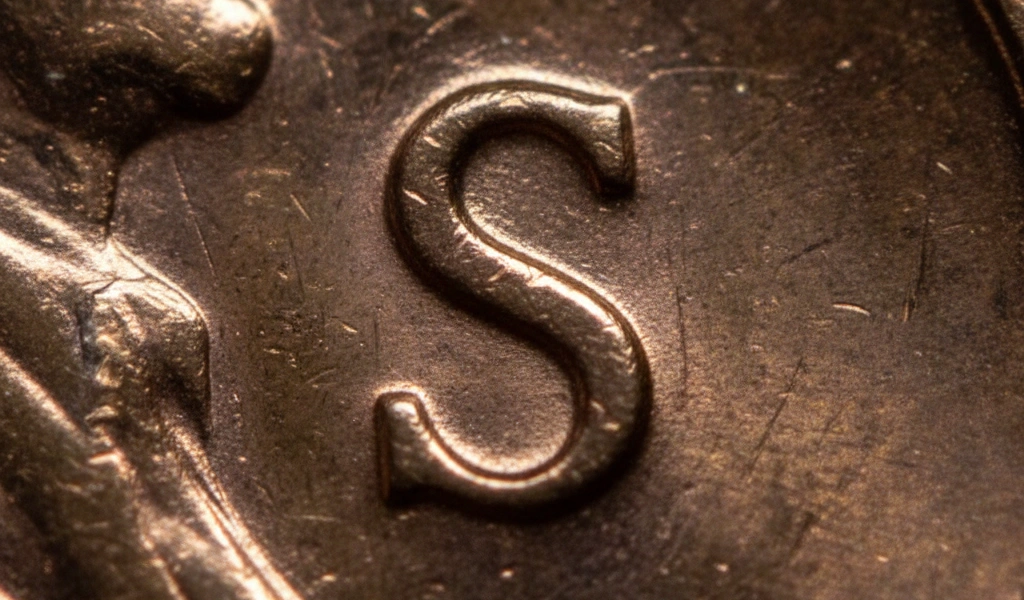
Polished dies and higher striking pressure create a finish superior to standard business strikes.
Features of SMS Quarters:
Exceptional detail in Washington’s hair.
Smooth fields lacking the rough flow lines seen on circulation coins.
Satin-like finish rather than a mirror-like shine.
Complete absence of "bag marks" or contact scratches.
Acquiring an MS67 SMS specimen typically requires an outlay of $25.
Deep Cameo SMS examples, featuring frosted images against brilliant fields, can exceed $600.
Strategic Identification Workflow
Locating rare variants necessitates the use of high-quality optics and precision scales.
Hidden value often resides in microscopic details invisible to casual observers.
The Verification Routine: Digital Scale → Calibration → Weighing to two decimal places.
Coin Scanner App Free → Date Inspection → Searching for doubling or digits overlapping.
Edge Check → Rotation → Looking for the Copper core sandwich.
Comparison → Database Lookup → Matching with known auction results.
Finding a silver error in a pocket change jar is statistically improbable in 2026.
Most significant discoveries occur within unsearched estate lots or original bank-wrapped rolls.
Comparing 1964 vs 1965 Market Drivers
Material differences dictate the massive price gap between these two consecutive years.
Sharing a nearly identical design makes the date the primary indicator of intrinsic value.
Feature | 1964 Issue | 1965 Issue |
Metal Content | 90% Silver | 100% Base Metal |
Melt Value | $4.75 (at $26 Silver) | $0.05 |
Mint Mark | Found on the reverse | None (removed for 1965) |
Investment Class | Commodity/Bullion | Numismatic/Speculative |
Removing mint marks in 1965 aimed to discourage hoarding by the general public.
Quarters dated 1964 continued to be struck well into 1965 to meet commerce demands.
Factors Influencing Long-Term Preservation
Chemical stability of the Copper-Nickel alloy exceeds that of traditional silver coins.
Environmental pollutants remain the primary threat to maintaining a high-grade status.
Triggers for Value Depreciation:
Fingerprint Oils → Permanent etching of the metal surface.
High Humidity → Induction of dark, unsightly oxidation.
Improper Storage → Scratches from sliding in plastic flips.
Cleaning Attempts → Destruction of original mint luster.
Losing the original luster automatically reclassifies a coin as a low-tier specimen.
Professional conservation services charge approximately $30 per item to safely remove surface contaminants.
2026 Market Dynamics and Digital Tools
Advanced scanning technology in 2026 allows collectors to verify authenticity instantly.
Online auction platforms provide a transparent history of realized prices for specific grades.
Buyer Statistics in the Current Market:
Portfolio Investors → 18% (Focusing on MS68 and Errors)
Casual Hobbyists → 60% (Filling Whitman folders)
Expert Flippers → 22% (Hunting for undervalued SMS sets)
Increasing interest from younger demographics supports the liquidity of clad coinage.
A coin appraisal app free connected to global databases helps prevent the purchase of overgraded items.
Essential Storage Protocol
Maintaining a coin’s state requires isolation from atmospheric moisture and contaminants.
Archival-quality materials prevent the development of "PVC damage" or surface "milk spots."
Hard Plastic Slabs → Best for high-value MS67+ items.
Mylar Flips → Suitable for mid-range SMS coins.
Silica Gel Packets → Necessary for humidity control in safes.
Constant Temperature → Avoiding attic or basement storage.
A single year of poor storage can degrade a coin from a $400 asset to a $20 asset.
Chemical "dipping" to restore brightness is detectable by grading agencies and results in a "Details" grade.