






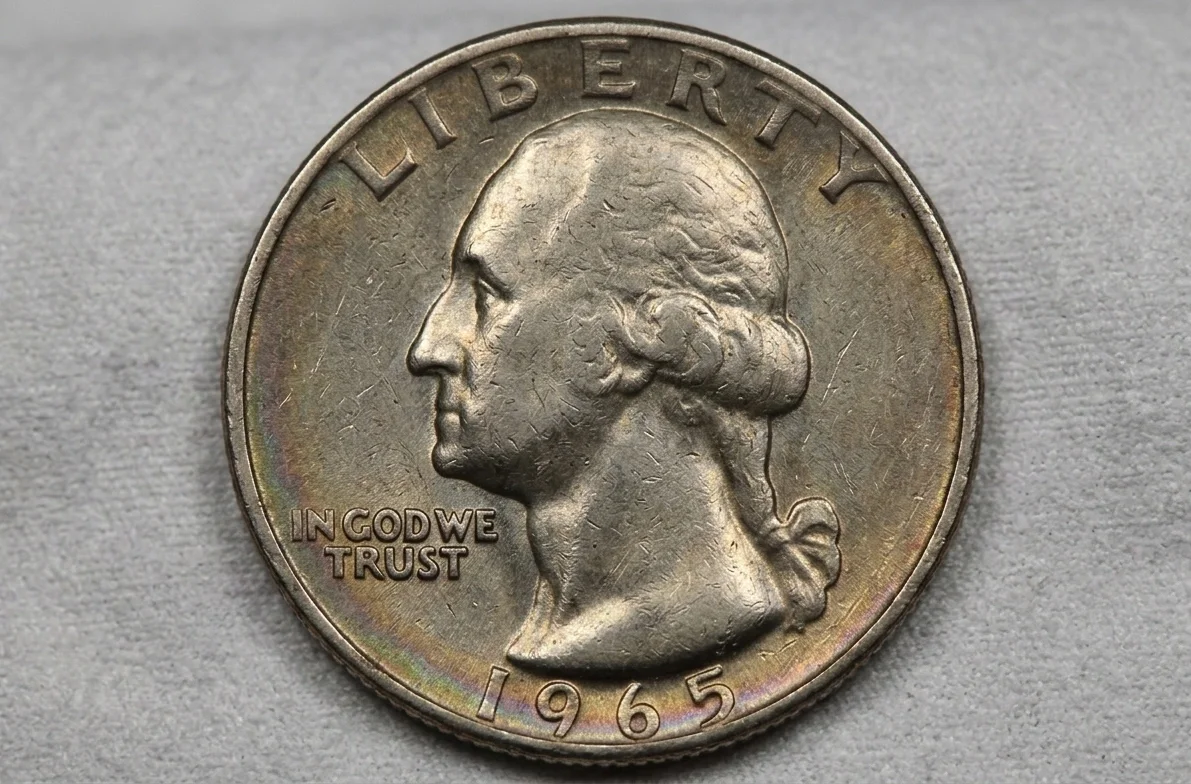








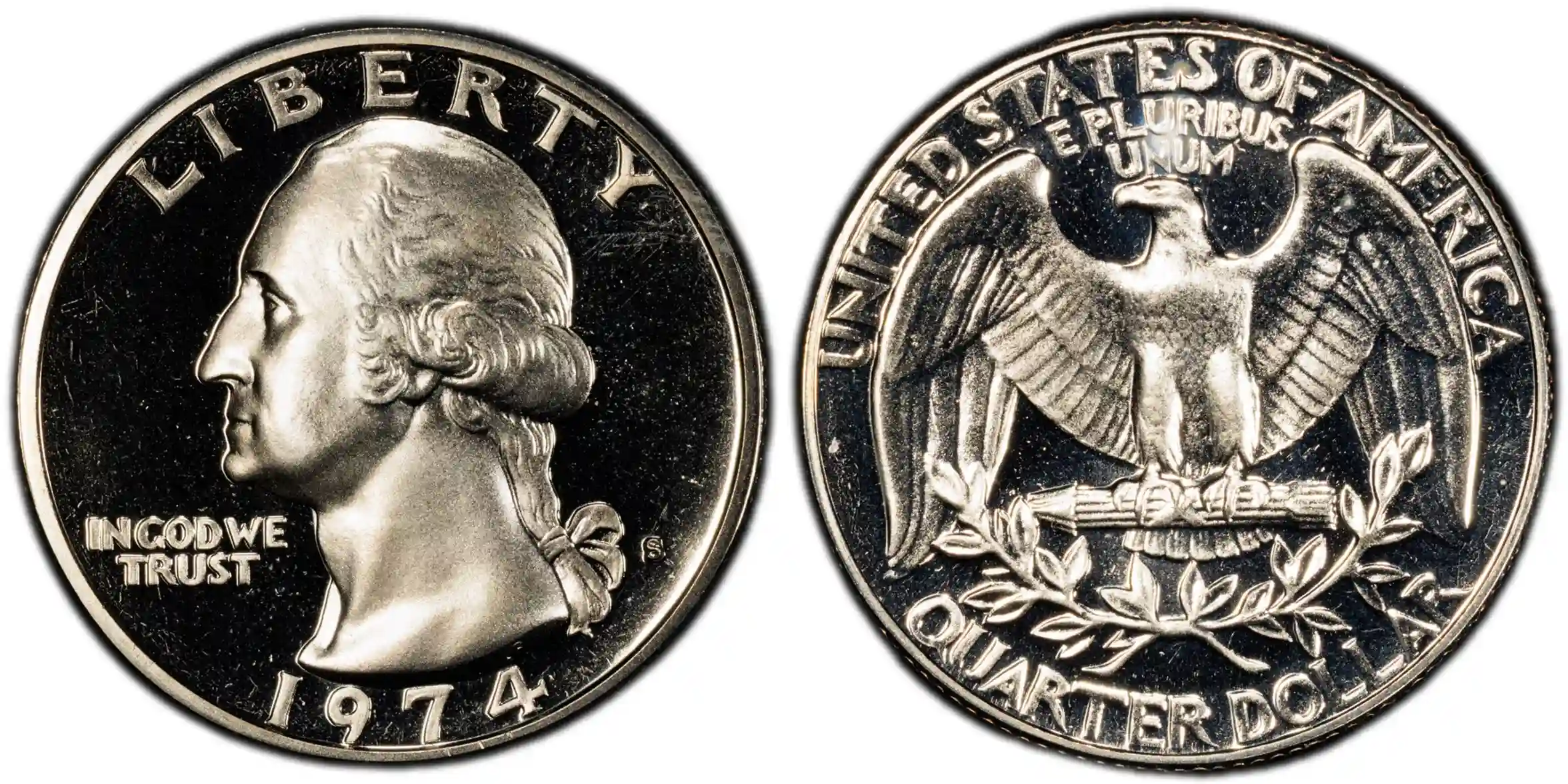









Not All 1971-S Pennies Are Created Equal
In 1971, the San Francisco Mint produced a significant number of one-cent coins having substantial differences in manufacturing technology and design details.
The division of the total mintage into regular business strikes and proof quality coins creates varying investment attractiveness — of course, it affects the 1971 S penny value.
All coins of this issuance year possess standard composition and physical parameters established by the United States Mint.
Material: 95% copper, 5% zinc
Weight: 3.11 grams
Diameter: 19.05 mm
Thickness: 1.52 mm
Obverse Designer: Victor David Brenner
Reverse Designer: Frank Gasparro
Differences Between Regular Strike and Proof
The San Francisco Mint in 1971 performed two tasks: providing circulating coinage and producing sets for collectors.
Regular Strike
The mintage totaled 525,133,459 specimens.
These coins were intended for use in commercial transactions.
Finding a specimen in a grade above MS67 remains an extremely rare event.
Proof
The mintage totaled 3,224,138 specimens.
The minting process utilized specially prepared dies on polished blanks.
Coins were packaged in protective plastic sets.
Obverse Classification: Small Date vs. Large Date
The primary value of 1971-S coins for numismatists lies in the existence of two date placement types.
Small Date Variety Characteristics
This variety occurs significantly less frequently, especially within Proof sets.
The top of the digit "7" sits below the level of the digit "9".
The curve of the digit "9" points inward, possessing a sharper tip.
The word "LIBERTY" often appears weaker and blurred due to specific die wear characteristics.
Large Date Variety Characteristics
The digit "7" is positioned on the same line as the top of the digit "9".
The digit "9" has a broader and more open tail.
The "LIBERTY" inscription is struck clearly and deeply.
Feature | Small Date | Large Date |
Position of digit "7" | Below "9" level | Level with "9" |
Shape of "9" tail | Points sharply inward | Points smoothly |
"LIBERTY" clarity | Reduced | High |
Frequency | Low (rare) | High (common) |
Auction Prices and Record Sales
Market value for 1971-S coins directly depends on preservation and the presence of contrast (Cameo/Deep Cameo) — check it via the coin value checker app.
Records for 1971-S Regular Strike (MS)
Regular strike coins in perfect condition are found rarely.
In 2004, a 1971-S specimen graded PCGS MS67 Red was sold for 16,100 dollars.
Today, prices for specimens in MS67 condition vary from 2,500 to 4,000 dollars, depending on the intensity of the Red color.
Records for 1971-S Proof (PR/PF)
For the Proof category, the presence of Deep Cameo (DCAM) status is critically important.
The average price for a 1971-S Proof Small Date in PR69 DCAM grade is approximately 1,000 — 1,500 dollars.
A 1971-S Proof Large Date specimen in an identical grade costs significantly less, being valued at 25 — 50 dollars.
Coin Category | Price Change (Year) | Reason for Volatility |
MS67 Red | +8% - 12% | Decreasing market supply |
PR69 DCAM (Small Date) | +5% - 7% | Stable investor demand |
PR69 DCAM (Large Date) | 0% - 1% | Market oversaturation |
Impact of Color Grading on Value
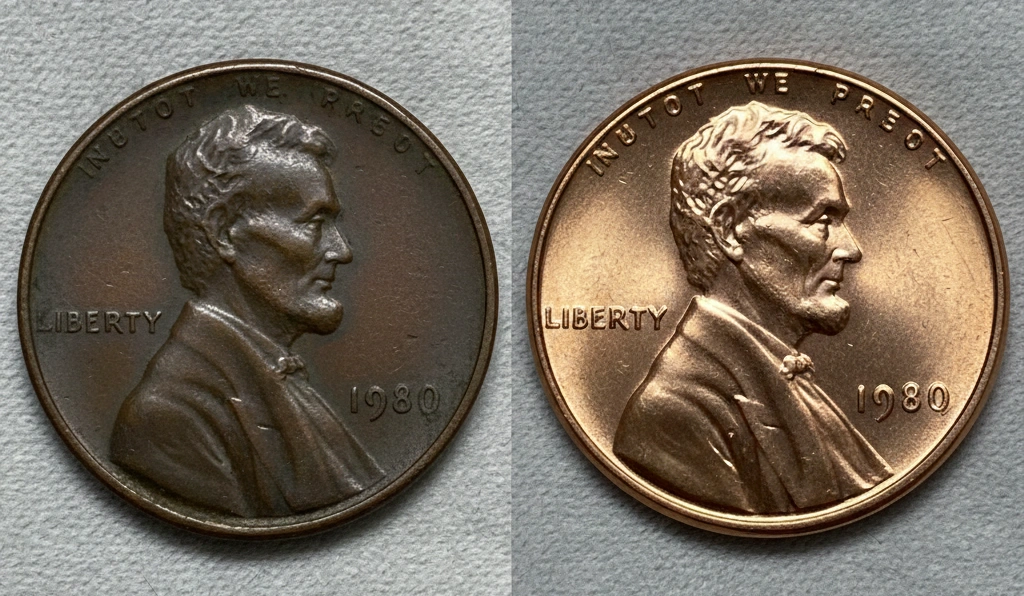
For 1971 copper coins, expert agencies (PCGS, NGC) use letter designations for surface condition.
RD (Red): The coin retained more than 95% of its original mint red luster.
RB (Red-Brown): The coin retained between 5% and 95% of its red color.
BN (Brown): The coin almost completely lost its luster, becoming brown.
The price drop when moving from the RD to RB category averages 60-70%.
An MS66 Red specimen may cost 150 dollars, while an MS66 Brown is valued at only 5-10 dollars.
Minting Errors and Die Defects
Besides date classification, specimens with production defects exist, increasing numismatic value.
Double Die Obverse (DDO): Doubling of obverse elements, noticeable on "LIBERTY" letters and date digits.
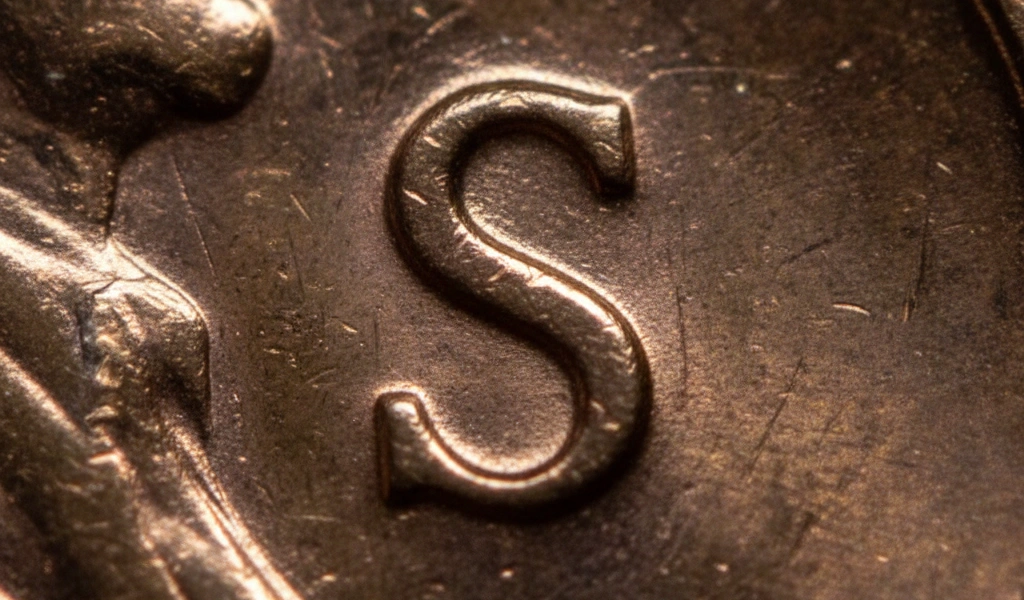
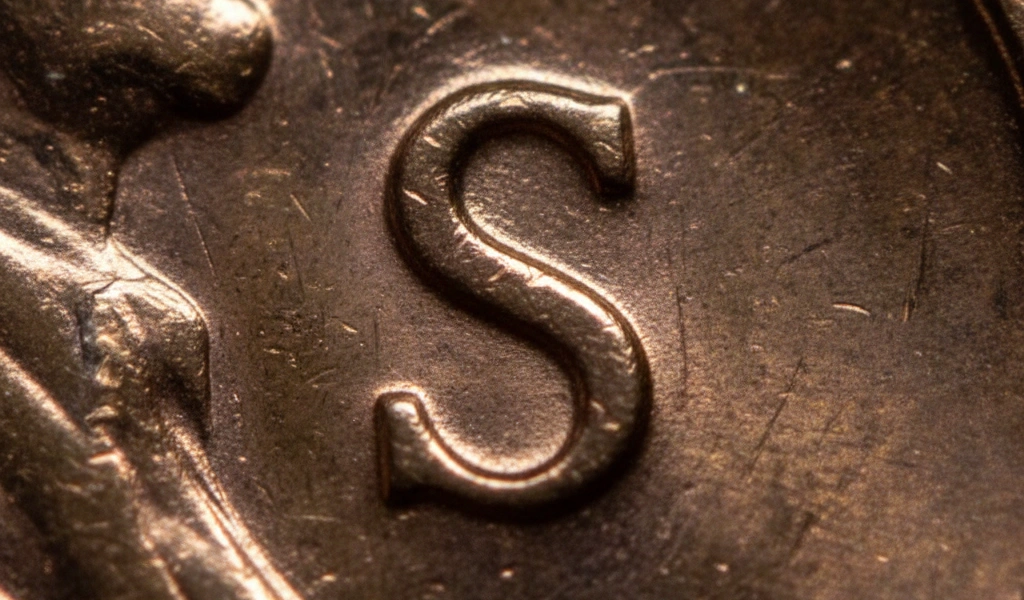
Prices for confirmed 1971-S DDOs in MS65 condition exceed 300 dollars.Repunched Mint Mark (RPM): A repunched "S" mint mark.
Several shift variants exist, adding from 20 to 80 dollars to the value.Die Clashes: Marks from dies striking each other, appearing as reverse outlines on the obverse.
Value depends on the clarity of the manifested details.
Investment Potential and Risks
Statistical data for the last 10 years show uneven price growth for different 1971-S types.
Investing in the Large Date variety in Proof quality does not yield profit due to the massive quantity of surviving sets.
Price growth for Small Date in PR69 grades and higher is driven by the deficit of certified specimens.
The number of 1971-S coins in MS67 grade is decreasing due to natural copper degradation during improper storage.
The oxidation process turns valuable Red category coins into less desirable Red-Brown categories.
Recommendations for Home Identification
For accurate variety determination, using a microscope with at least 10x magnification is necessary.
The first step involves checking the level of the digit "7" with the coin identifier app.
The second step involves inspecting the "LIBERTY" inscription.
The third step assesses the general surface condition for micro-scratches.
Value Assessment Algorithm: 1. Identification of strike type (Proof or Business).
2. Determination of date size (Small or Large).
3. Color evaluation (RD, RB, BN).
4. Verification of Cameo status for Proof coins.
5. Comparison with sold lot databases on Heritage or Stack's Bowers auctions.
The 1971-S one-cent coin represents a complex object for classification.
The existing price difference between Small Date and Large Date reaches hundreds of percent.
Possessing accurate data regarding physical differences and market statistics allows eliminating errors when buying or selling these numismatic objects.
The actual surface condition and the rarity of a specific die remain the decisive factors in pricing.